




Full-Scene Solution for Senior Walking Canes & Mobility Maintenance


Centered on the full-cycle mobility needs of elderly residents, this integrated solution deeply combines personalized cane adaptation, gait rehabilitation, risk early warning and environment optimization. It not only addresses the walking support pain points of seniors with different physical conditions, but also delays muscle loss and improves walking stability through systematic maintenance. The solution is fully applicable to high-end senior care facilities, community elderly care centers and home aging-friendly renovation scenarios, fully complying with the industry safety standards for senior mobility assistive devices in China.
1. Tiered Precision Cane Adaptation System
Personalized selection is carried out based on seniors' muscle strength, balance ability and walking habits, to avoid secondary injuries caused by improperly fitted general canes:
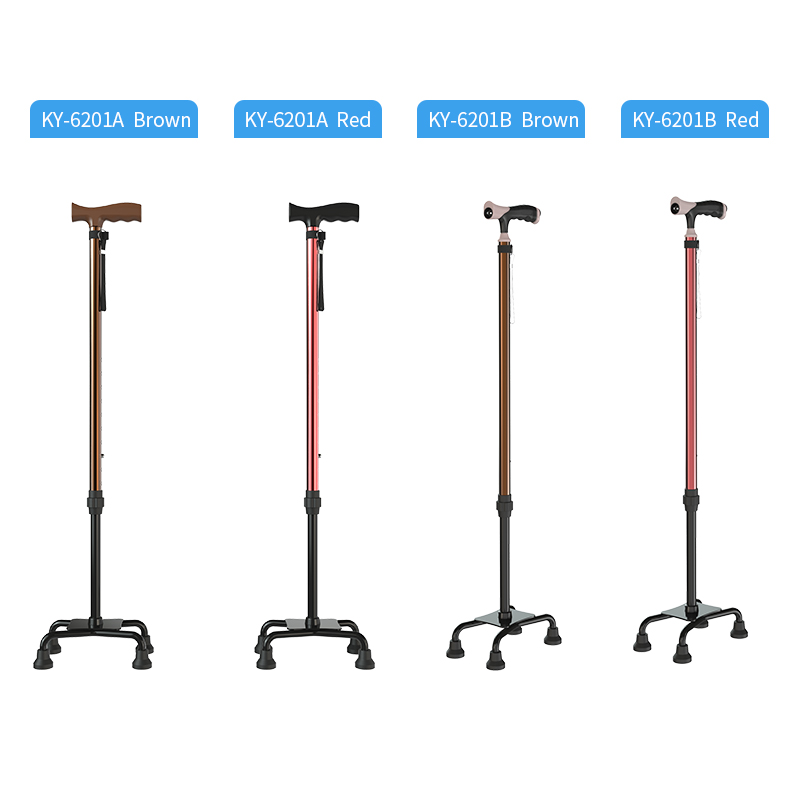
For seniors with mild mobility impairment: We recommend lightweight aluminum alloy quad canes with total weight controlled under 0.5kg. The bottom is equipped with anti-slip silent rubber tips, and the shaft supports 7-level height fine adjustment, adapting to seniors with heights from 150cm to 185cm. The ergonomic silicone wrapped handle disperses palm pressure, preventing calluses even after long-time gripping, which is ideal for healthy younger seniors who only need minor assistance to walk independently.
For seniors with moderate muscle strength decline: Elbow-supported underarm crutches are the preferred option. The widened high-elastic soft padding on the underarm support part prevents arm numbness caused by long-time compression on underarm nerves. The built-in spring buffer structure absorbs ground impact force during walking, reducing the load pressure on knee joints, which is highly suitable for seniors with knee arthritis or unilateral muscle weakness, effectively lowering joint wear during movement.
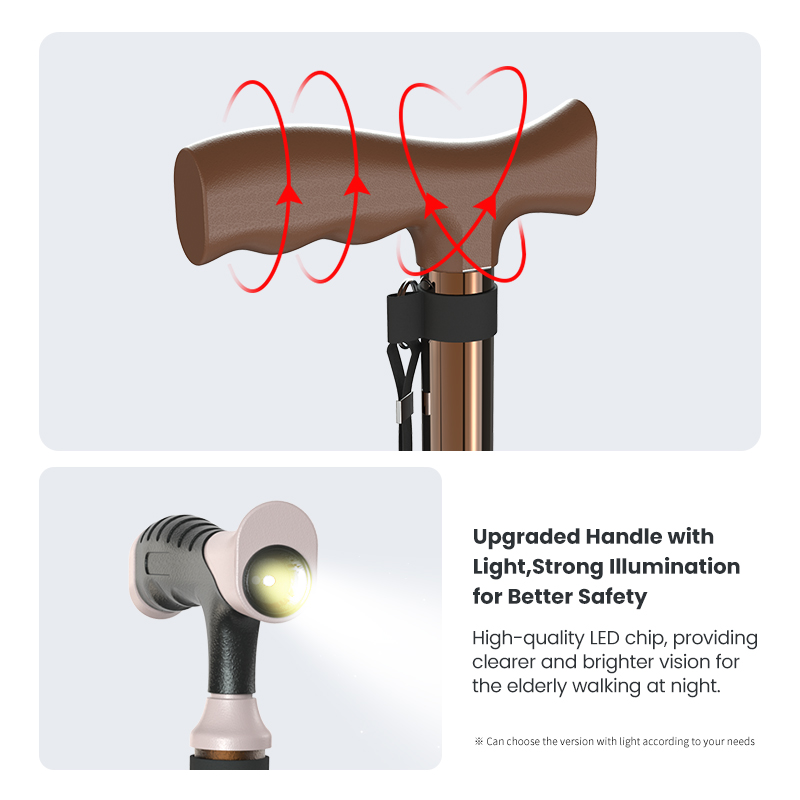
For seniors with cognitive impairment or high fall risk: Smart location-enabled walking canes are deployed. The shaft integrates a millimeter-wave posture sensor that monitors walking gait in real time. It automatically triggers an alert when detecting body imbalance or potential fall, and synchronizes the location information to caregivers. The triple anti-slip tips maintain strong grip even on wet surfaces, and the built-in one-click call button allows seniors to ask for help directly in case of sudden discomfort.
Calibration Standards: Precise height calibration must be completed before cane usage. When the senior is standing, a 3-5cm safe gap should be maintained between the top of the cane and the underarm, and the handle height should be adjusted to the wrist position when the senior's arm hangs naturally. This ensures the senior's arm bends naturally at 15-30° while walking, avoiding shoulder and elbow injuries caused by wrong force postures.
2. Full-Cycle Mobility Maintenance Intervention Program
This program improves walking ability from multiple dimensions including muscle exercise, gait correction and daily care, delaying the decline of seniors' mobility:
Targeted Muscle Strength Training: Low-intensity lower limb strength training is carried out under the guidance of professional therapists. With tools such as resistance bands and balance pads, 20-minute targeted sessions are conducted 3 times a week, focusing on strengthening the quadriceps and ankle stabilizing muscles. This improves walking support ability and reduces seniors' over-reliance on canes.
Gait Correction and Maintenance: A gait monitoring file is established for each senior. The smart cane's motion data is used regularly to analyze abnormalities in walking stride, cadence and center of gravity deviation. Wrong walking habits such as "dragging feet" and "unilateral center of gravity tilt" are corrected in time, preventing chronic waist and knee injuries caused by long-term incorrect gait.
Foot Health Management: Regular foot screenings are provided for seniors. For common elderly foot problems including hallux valgus, plantar calluses and collapsed arches, customized pressure-relief insoles are made to disperse plantar pressure during walking, fundamentally improving walking stability. Matching non-slip, wide-toed age-friendly shoes are recommended to prevent walking imbalance caused by tight or slippery footwear.
3. Supporting Safety Protection for Cane Usage
This section eliminates hidden risks during cane usage and builds a full-scenario safety support environment:
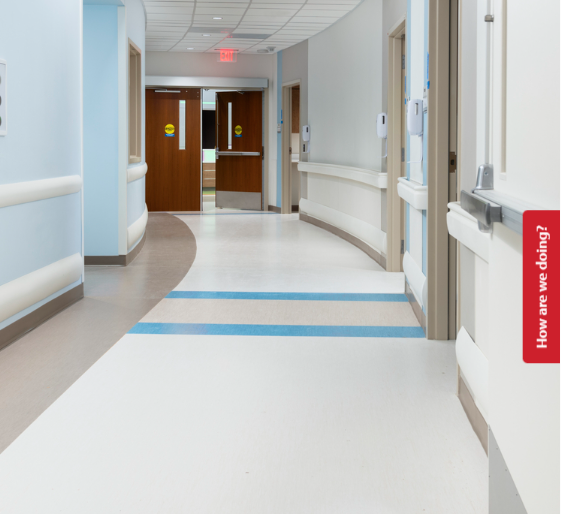
Environment Adaptation Optimization: Public corridors and living spaces in senior care facilities are kept flat with no protrusions, avoiding tripping hazards caused by curled carpets or scattered items. Special cane slots are installed beside handrails and rest areas for temporary placement, preventing canes from slipping off walls and accidentally injuring seniors.
Routine Maintenance Mechanism: A regular cane inspection log is established. The wear condition of anti-slip tips is checked weekly, and tips are replaced immediately when the tread wears flat to avoid performance degradation. All height adjustment screws are tightened regularly to prevent unexpected shaft shrinkage or breakage during usage.
Usage Guidance and Training: Professional rehabilitation staff demonstrate correct operations for cane users and caregivers, including going up and down stairs, standing up and sitting down, to avoid fall injuries caused by wrong force application. For seniors with vision impairment, high-visibility reflective marks are pasted on the cane shaft to improve visibility during night walking.
4. Smart Linked Safety Early Warning System
Cane data is connected to the senior care smart management platform to realize proactive intervention for mobility risks:
The gait and location data of smart canes are synced to the care management system. When a senior stays in a public area for an excessively long time or their gait shows obvious abnormalities, the system automatically pushes alerts to the nearest caregiver for timely assistance.
For seniors with cognitive impairment, electronic geofences can be set. When a senior carrying the cane moves beyond the facility's safe activity range, the system immediately triggers an alert to prevent accidental wandering.
The system automatically records each senior's daily walking duration and activity range, generating a mobility assessment report combined with their health file. This provides data support for subsequent maintenance plan adjustments, realizing the upgrade from "passive protection" to "active mobility care".
Measurement, design, sampling, installation, 5-year warranty, 24-hour response, one-stop worry free service


 Phone: 8613256161276
 Email: jinanhengsheng@zs567.net
 Postal Code:250000